

Art Analysis
A Pecha Kucha group presentation by Group 8

The task for the activity involves gathering four artworks (one is provided by our professor) and analyzing them using the four planes of analysis.
The four artworks that we chose were:
Flag by Jasper Johns (1955)
Nighthawks by Edward Hopper
Our Lady of Palo by Wilfredo Tadeo “Willy“ Layug
Yiwu Grand Theater by MAD Architects
Using the four planes of analysis — the basic semiotic, the iconic, the contextual, and the axiological or evaluative planes — in analyzing these artworks has been an eye-opening experience for me. It allowed me to explore the intricate layers of meaning in the artwork assigned to me, discovering what the artists intended to communicate. By looking at the visual elements and signs, understanding the artistic techniques, considering historical and cultural background, and evaluating the artworks based on personal opinions, I surely gained a deeper understanding and appreciation for the complexity and beauty of the art. This way of analyzing art helped me see it from different angles and connect it on a deeper level, giving me new insights and perspectives on artistic expressions.
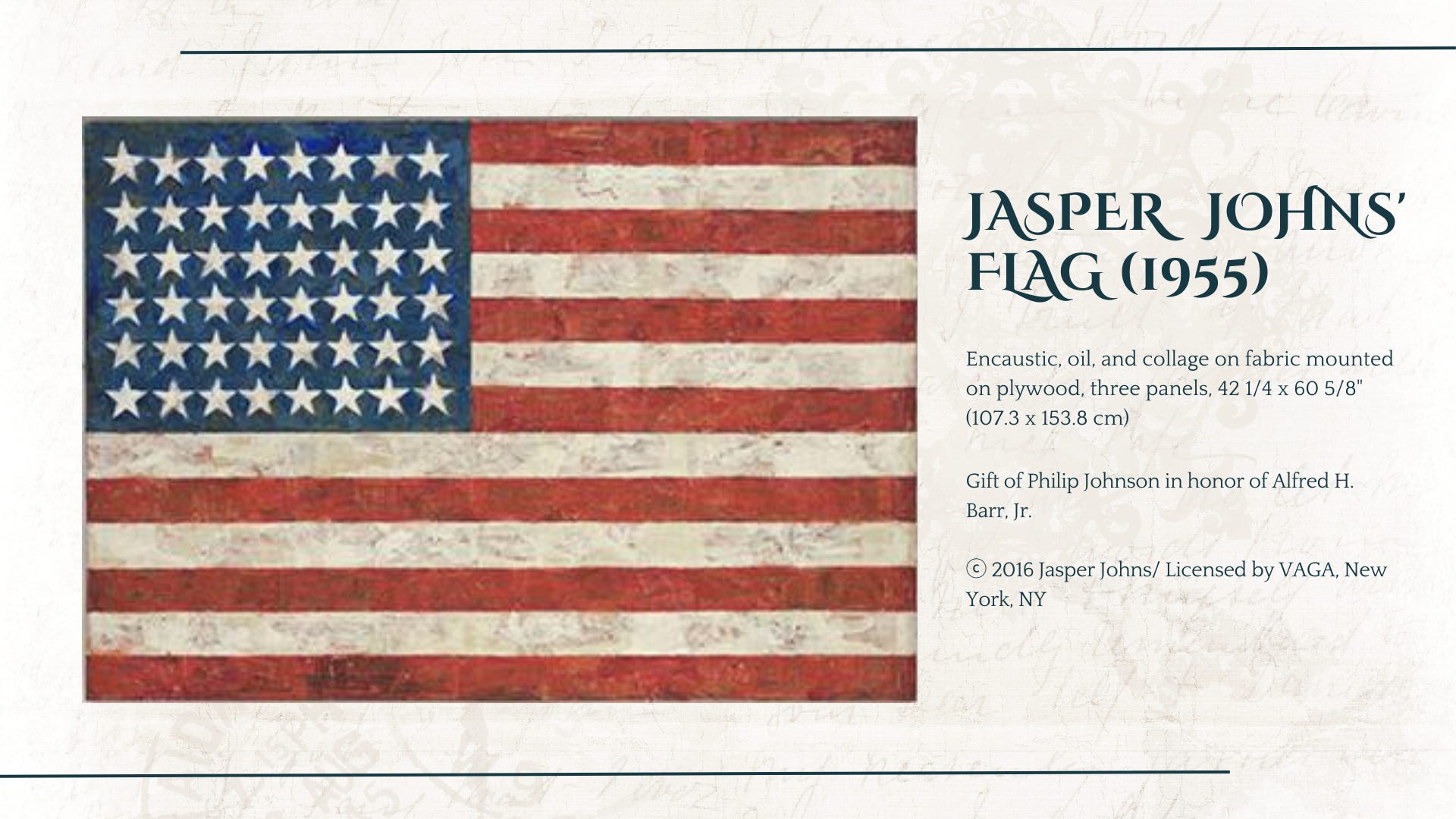
The assigned art to me was the Jasper Johns’ Flag (1955)
Using the four planes:
the basic semiotic — the “Flag“ depicts the American flag, using visual elements like start and stripes to create a feeling of patriotism and connection to the national identity. The flag symbolizes deep meaning connected to the concept of freedom, unity and democracy.
the iconic — Jasper Johns’ technique is very distinctive in a way that it features vibrant brushstrokes and textured surfaces. He utilized encaustic paint where he achieves a remarkable three-dimension effect that enhanced the depth and texture of the whole artwork. His unique style ultimately creates a strong visual presence and challenges conventional notion of a flag being two-dimension.
the contextual — the art was produced during a significant period in the United States. This era was characterized by the emergence of abstract expressionism and a critical reevaluation of established artistic norms. This art can be a challenge to the notions and principles linked to the American flag in the aftermath of the war.
the axiological or evaluative planes — the “Flag“ encourages the viewers to introspect and consider their individual reactions and understanding. It triggers contemplation about the symbolism and importance of national symbols.
By the end of this activity, I was convinced that Jasper Johns’ “Flag“ (1955) is a thought-provoking artwork that deserves to be appreciated and comprehended by the world.